

My project is going to be about Game Theory. Mathematics can be one of the key ways of making decisions when the time comes. Mathematics can be one of the key points of invention and innovation.
That even in modern day Mathamatics is used to prove what is good and what is wrong. How do we save lives instead of taking lives. That in even books mathamatics of war is still in play.
Here we are going to go indepth about about the Game Theory . Also why Game Theory can be a big factor in past and mondern day decions.
The red and blue light flashes behind you, getting ever closer as the seconds pass by. With nothing left to lose you keep running, down streets, behind houses, through the tunnels, until there's nowhere else to go. With the light now in front and behind you all you can do is stop, take a deep breath and prepare for what is to come.

Now locked in a room chained to the table the detectives are telling you they also caught your partner in this whole mess. Now they are trying to get you to break and confess your crimes. Realizing the whole good cop back cop integration method is not working the detectives choose to offer you a deal. Snitch on your partner, tell them what they did and youll be given a lighter sentence. Or you can hope and pray that your co-conspirator also chooses to stay silent and not rat you out. As the door slams behind the detective, you're left to sit chained to a table and decide what your fate is going to be. Will you stay silent hoping your partner stays silent as well, rat out your partner and get a lighter sentence, or have the possibility of your partner snitching on you so you get a much harsher sentence. What choice are you going to make?
Now ideas like this one and many more are what we call Game Theory. Which is stated the best way by PBS "Game theory studies interactive decision-making, where the outcome for each participant or "player" depends on the actions of all. If you are a player in such a game, when choosing your course of action or "strategy" you must take into account the choices of others." Now here we are going to go over the history, mathematics, and the importance of Game Theory. Now sit back, relax and let's dive into Game Theory.
Throughout history the intrigue of winning, the interest on if we can predict that a person will win or lose. With mathematicians leading the way we are starting in 1928, where John von Neumann published the book Theory of Game Strategy. Where we see one of the first proofs of game theory using Brouwer's fixed-point theorem, on continuous mappings into convex sets. Neumann work became the standard method for Game Theory. Then in 1944 Neumann published his book going more into depth about Game Theory, and economic behaviors.

In 1950 the first mathematical conversions of the prisoners' dilemma were happening. Around this time, John Nash introduced the concept of the Nash equilibrium, a standard for ensuring that players' strategies are mutually consistent. Unlike the earlier criterion by von Neumann and Morgenstern, Nash's idea applied to a broader range of games. He showed that any finite, non-cooperative game with multiple players and non-zero-sum outcomes has at least one Nash equilibrium in mixed strategies.
Now in Game Theory there are a lot of different ways game theory can be applied in games like symmetric/asymmetric, zero-sum/non-zero-sum, Simultaneous/sequential, Perfect information and imperfect information, Bayesian game, Combinatorial games, Discrete and continuous games, and finally Differential games.
Let's first start by going into Nash Equilibrium, and what it actually means. Nash Equilibrium is a law that no person would want to break even if there were no laws around to break. In saying "When the goal is to give advice to all of the players in a game (i.e., to advise each player what strategy to choose), any advice that was not an equilibrium would have the unsettling property that there would always be some player for whom the advice was bad, in the sense that, if all other players followed the parts of the advice directed to them, it would be better for some player to do differently than he was advised."(Charles A. Holt)
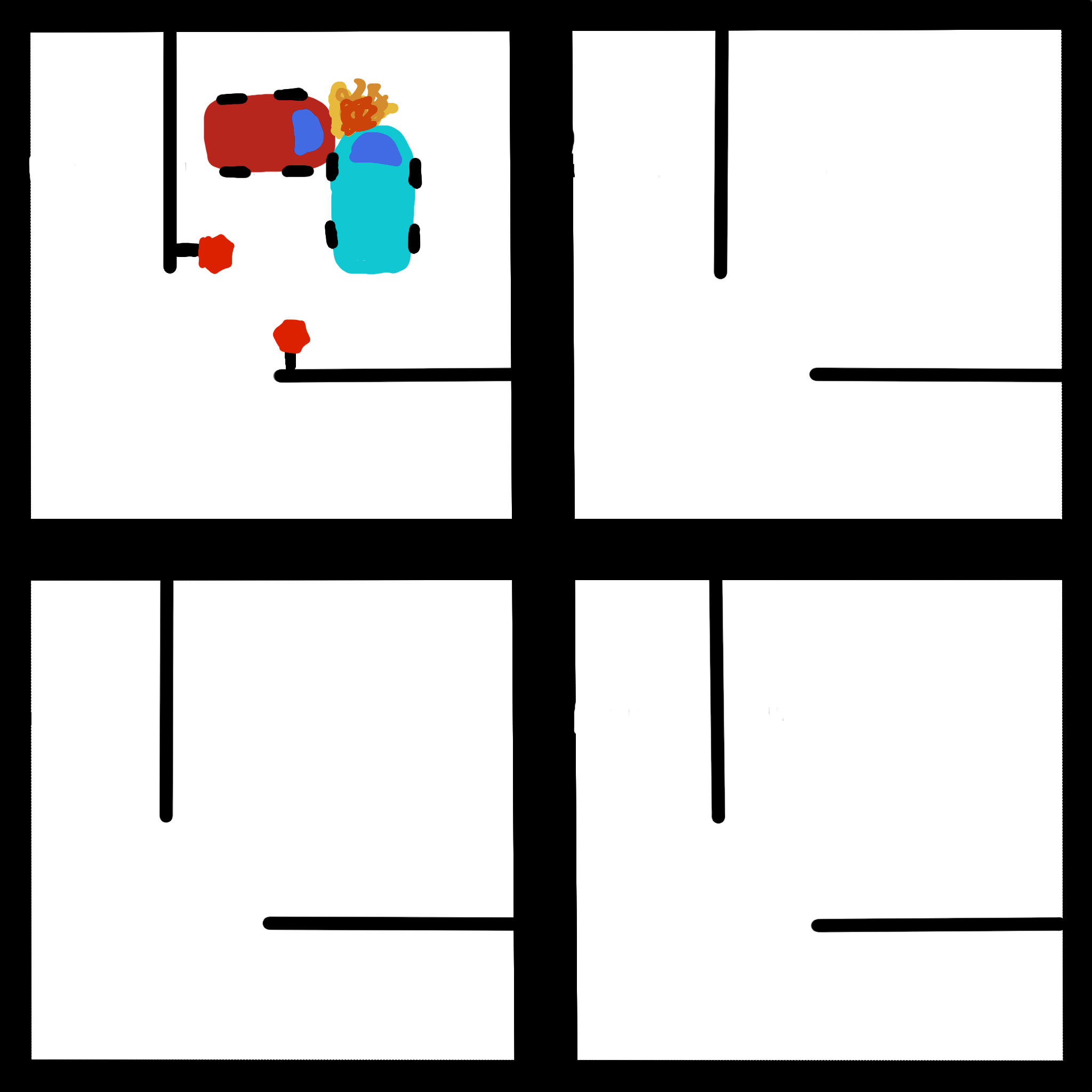
For example, let's imagine a situation where there were no police officers, so people could choose to run a red light if they wanted to. We can set up a 2x2 matrix where the first volume is the go and second is the stop. The rows where they go and the next one where they stop. Now lets start with analyzing car one, if car 2 chooses to go, car one's best option is to stop. If car two chooses to stop car one's best option is to go.
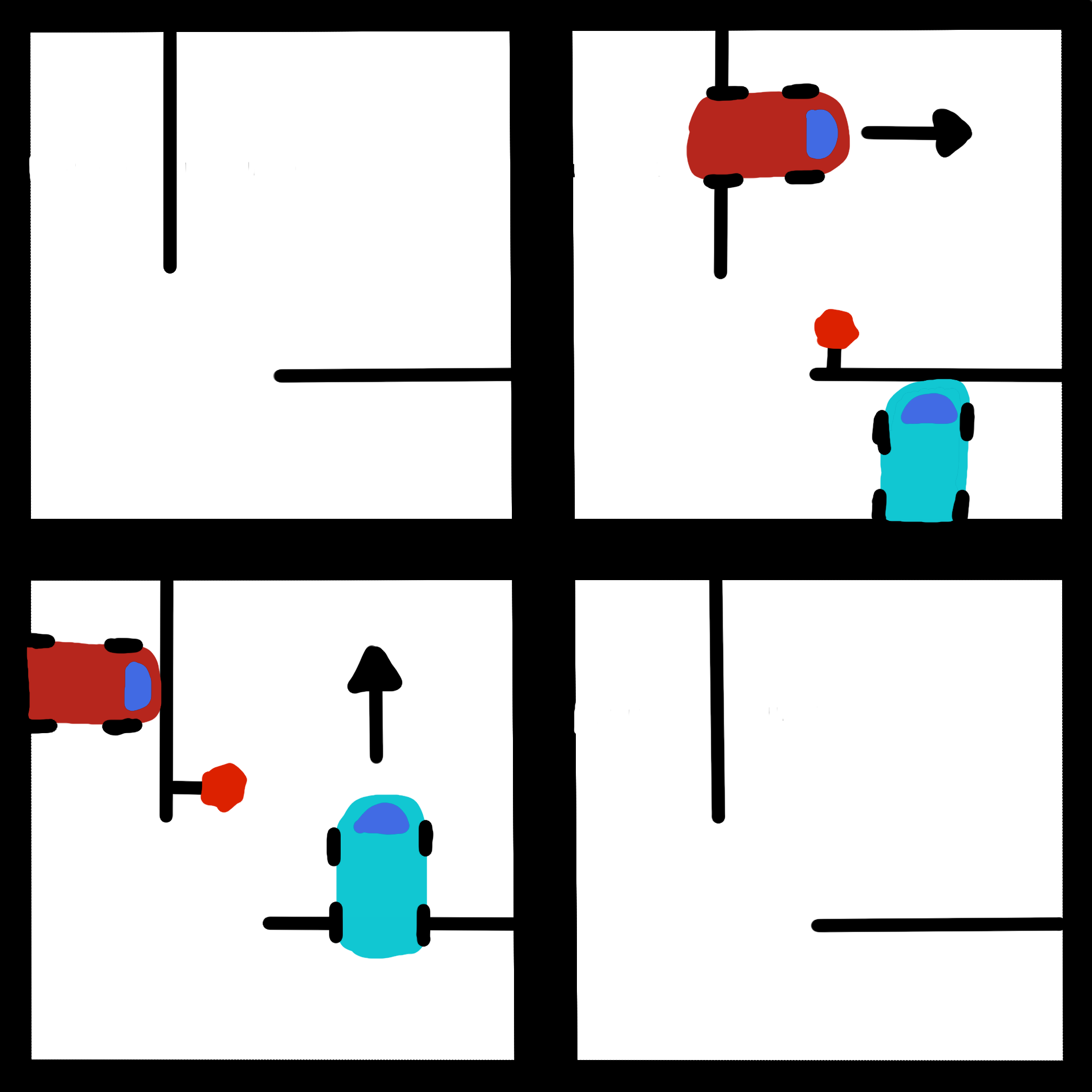
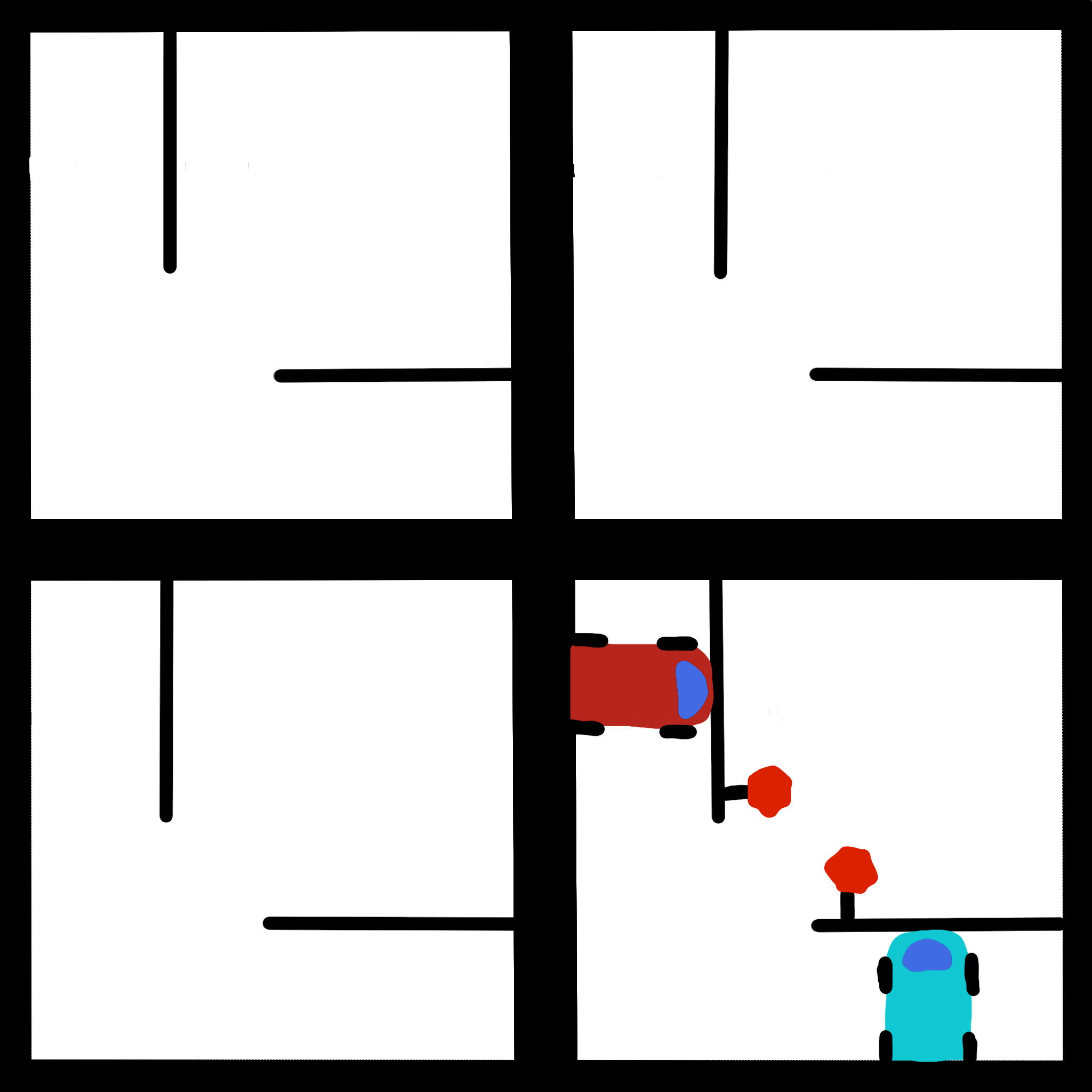
Now looking at car two, if car one chooses to go car two's best option is to stop. Now if car one chooses to stop car two's best option is to go. If both cars stop nothing happens and both cars are just sitting there.
If both cars go we get a disaster neither driver wants. Looking at all the choices given what would you do? Looking at our Matrix we can see that we have two Nash equilibriums. Both Where if one car stops the other car goes.
Now lets use this topic of Nash Equilibriums lets talk about having a Dominate Strategy. Where both players of the game are going to pick their best outcomes, based on the options the other person has a well. So no matter what option is chosen , you will make the same choice. This reality of using the Nash equilibrium is used a lot in modern day economics to make business decisions based on competitors. Now I'm going to show you the definitions written by Chris George and slightly adapted by me:
A strategy is dominant for a player if there is another strategy that always gives the player a higher payoff, no matter what the other players choose. For example if one strategy is always worse than another, it is dominant and can be discarded.
This strategy is where people repeatedly remove the dominated strategies from the game for both players. This process eventually leaves a single outcome or a unique strategy. If it is done this way then our game is considered "solvable by iterated dominance."
This is the strategy that remains after eliminating all the other dominant strategies. This type of strategy is the reasonable strategy to play but only assuming all players act rationally. Going back to our story above about the prisoner's dilemma, the only rationalizable strategy is (D,D) where both players choose to defect. While in a game of chicken we can find multiple rationalizable strategies (C,C), (C,T),(T,C), and (T,T) because both C (cooperate) and T (turn) can both be considered rational choices. Now knowing all these types of strategies can help players find the best strategies, first off by narrowing down their options and identifying outcomes where no player has an incentive to unilaterally change their choice.
Now we want to understand what the best response is and why it is important for the players to know. For a strategy to be considered the best response it needs to give the highest possible payoff against the strategies that the opponent could play. If there are multiple strategies that offer the same highest payoff they all are considered the best responses, this could also be called the best response set.
A pure strategy of Nash equilibrium is where each player's chosen strategy is the best response to the strategies that are chosen by the other players. Which could be said that no player can improve their outcome by changing their strategy while the others keep theirs the same.
A mixed strategy involves randomly selecting among different pure strategies with certain probabilities. A Mix strategy can occur when each player's mixed strategy is the best response to the mixed strategies that the other players may play. It's also important to note that a mixed strategy is also included in pure strategy but just as a special case.
ust as a special case. Nash's Theorem: John Nash proved that every finite game has at least one Nash Equilibrium in mixed strategies. He then concluded that if a game does not have pure strategy equilibrium it will have mixed strategy equilibrium

Now using all of these definitions lets look at an example of a game of rock paper scissors, and we can see how Nash's Equilibrium applies. First off we can tell that a pure strategy is not possible because if player one chooses rock and player two chooses paper, player two is doing better, but if player one can always switch to scissors to win. So there is a good single choice that is stable, because in a game of rock paper scissors there is always an incentive to change.
Now if we look at the game under a mixed strategy we can see that each player randomly chooses Rock, Paper, or Scissors with equal probability of 13 each. Meaning that each player has an equally likely chance to win, lose, or draw. That no player can improve their outcomes by changing their strategy because all choices are equally risky. With our Mixed Equilibrium, we can see that both players have an expected payoff of 0, because the chances of winning, losing, or drawing balances out.
Game theory plays a significant role in our everyday lives, often without people even realizing it. The field of student which examines strategic decision-making is applied in various scenarios, ranging from simple everyday interactions to highly complex economic structures. In economics, game theory is particularly important, as it helps companies determine the most advantageous choices, especially when setting prices, anticipating competitors' moves and optimizing resource allocation.
Beyond these applications, game theory involves an array of mathematical concepts and frameworks that delve deeply into human behavior, competition, and cooperation. What we can learn or see about game theory in basic overview merely scratches the surface of this extensive and intricate subject. As time moves on we will see game theory adapt and change with technology and with mathematics.